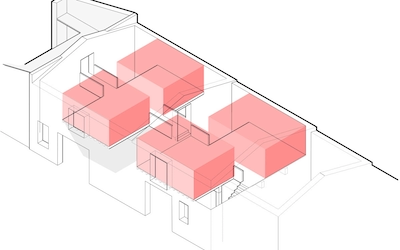
Architectural concept project for the renovation of a small, fire-damaged stone house overlooking the Charente river, transforming the abandoned ruin into a two-bedroom holiday home that embraces its riverside setting.

This is a conceptual study into how sensitive architectural renovation can give new life to derelict rural buildings across southern France. The existing structure – roofless, weathered and partially collapsed following a fire – has stood uninhabited for approximately twenty years and has steadily fallen into ruin over that time. Its thick stone walls, however, remain structurally expressive, anchoring the proposal in the site’s history while providing the framework for a contemporary renovation.
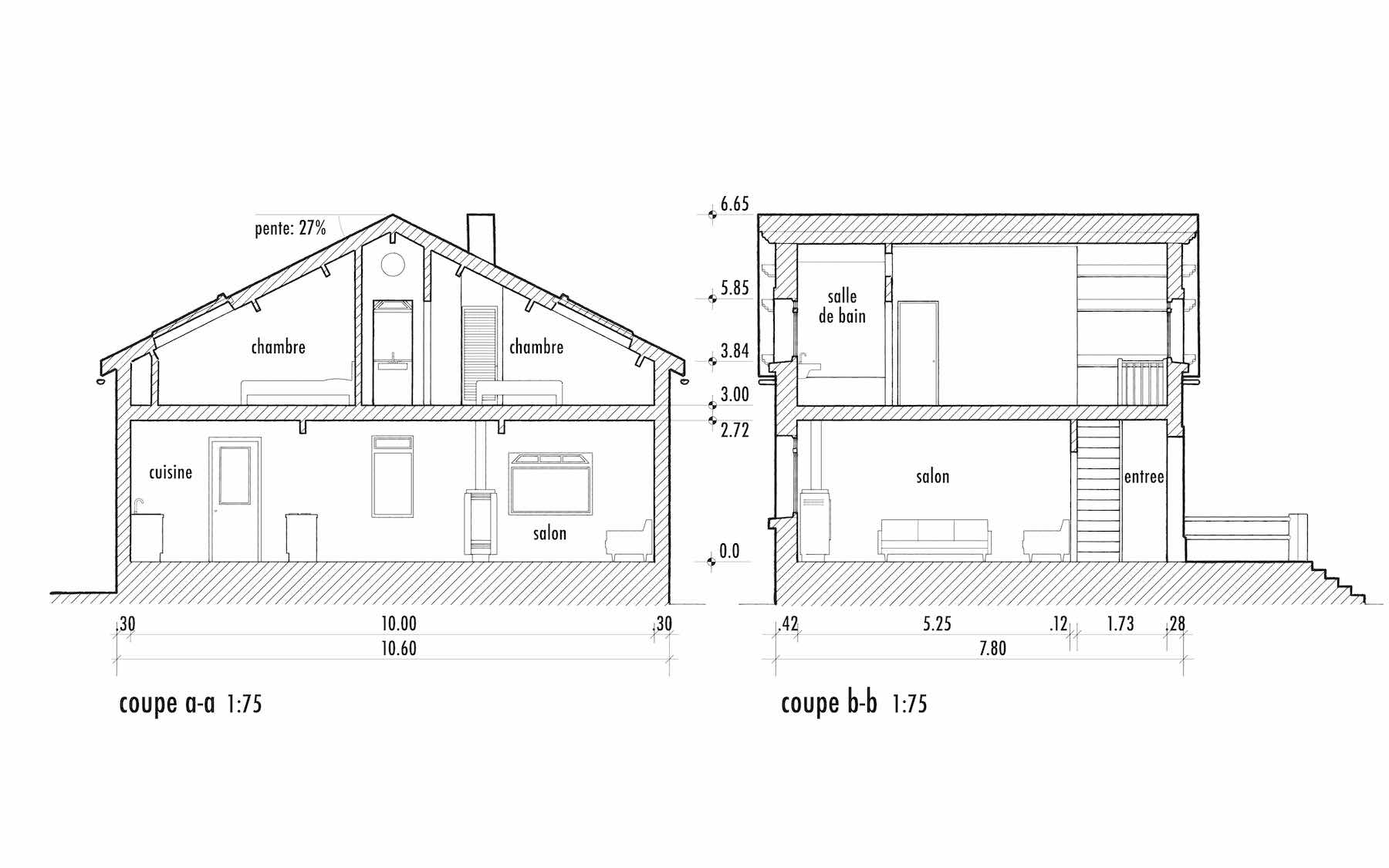
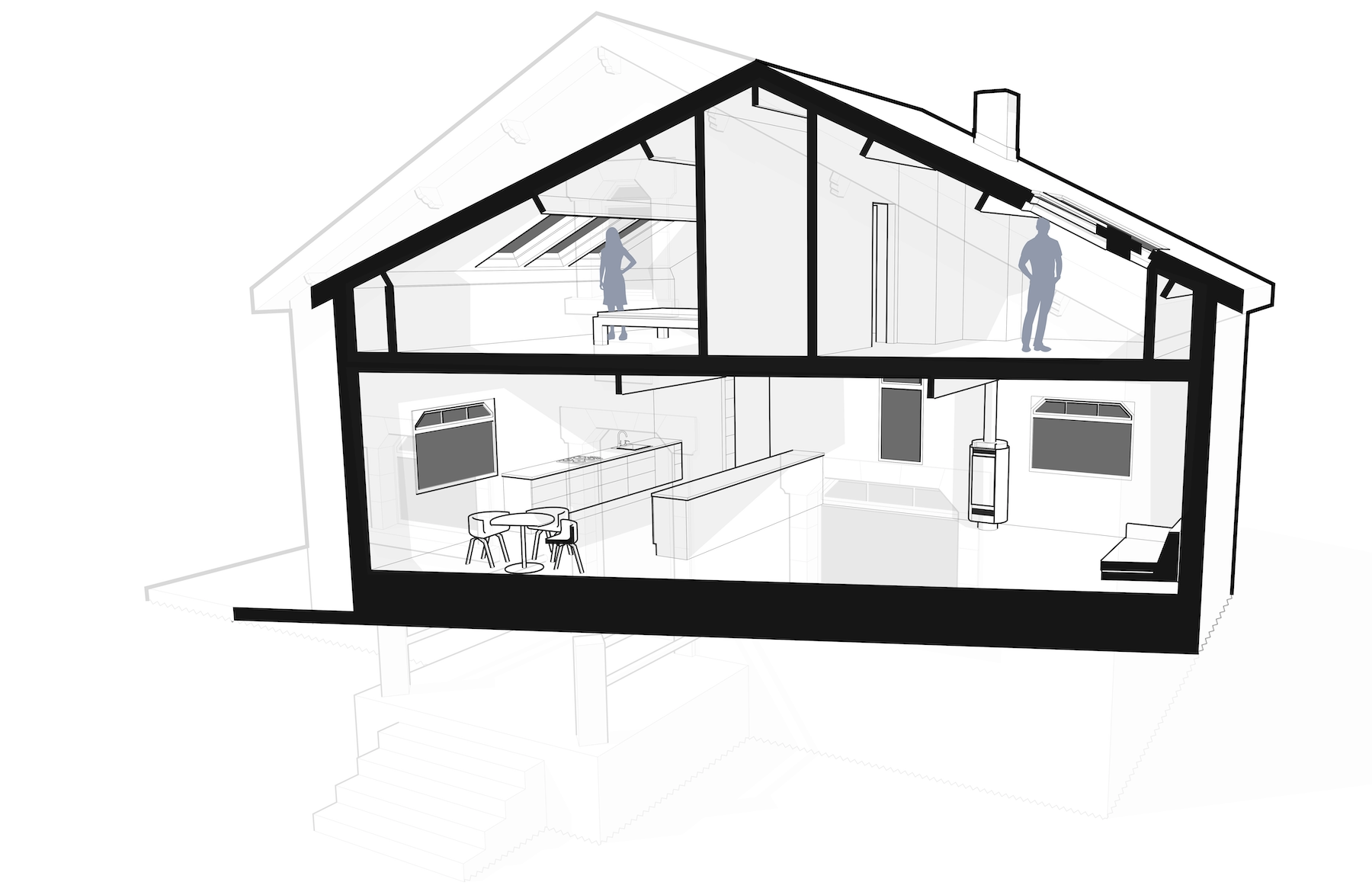
The drawings outline a carefully considered renovation strategy that retains the original masonry shell while inserting a new timber roof structure and lightweight upper level. Designed to maximise natural light and views of the Charente river, the proposal introduces generous glazed openings within the existing apertures, alongside a riverside terrace that extends the living space outdoors. The result is a compact yet spacious two-bedroom holiday home, organised around an open-plan kitchen, dining and living area that connects directly to the landscape.

Upstairs, the reconfigured layout accommodates two bedrooms and a shared bathroom beneath a pitched roof with exposed timber beams. The architectural concept prioritises energy-efficient renovation techniques, including high-performance insulation, passive solar gain and carefully positioned openings for cross-ventilation. By combining traditional stone construction with contemporary detailing, the scheme demonstrates how a fire-damaged ruin can be converted into a sustainable French holiday home suited to modern living.
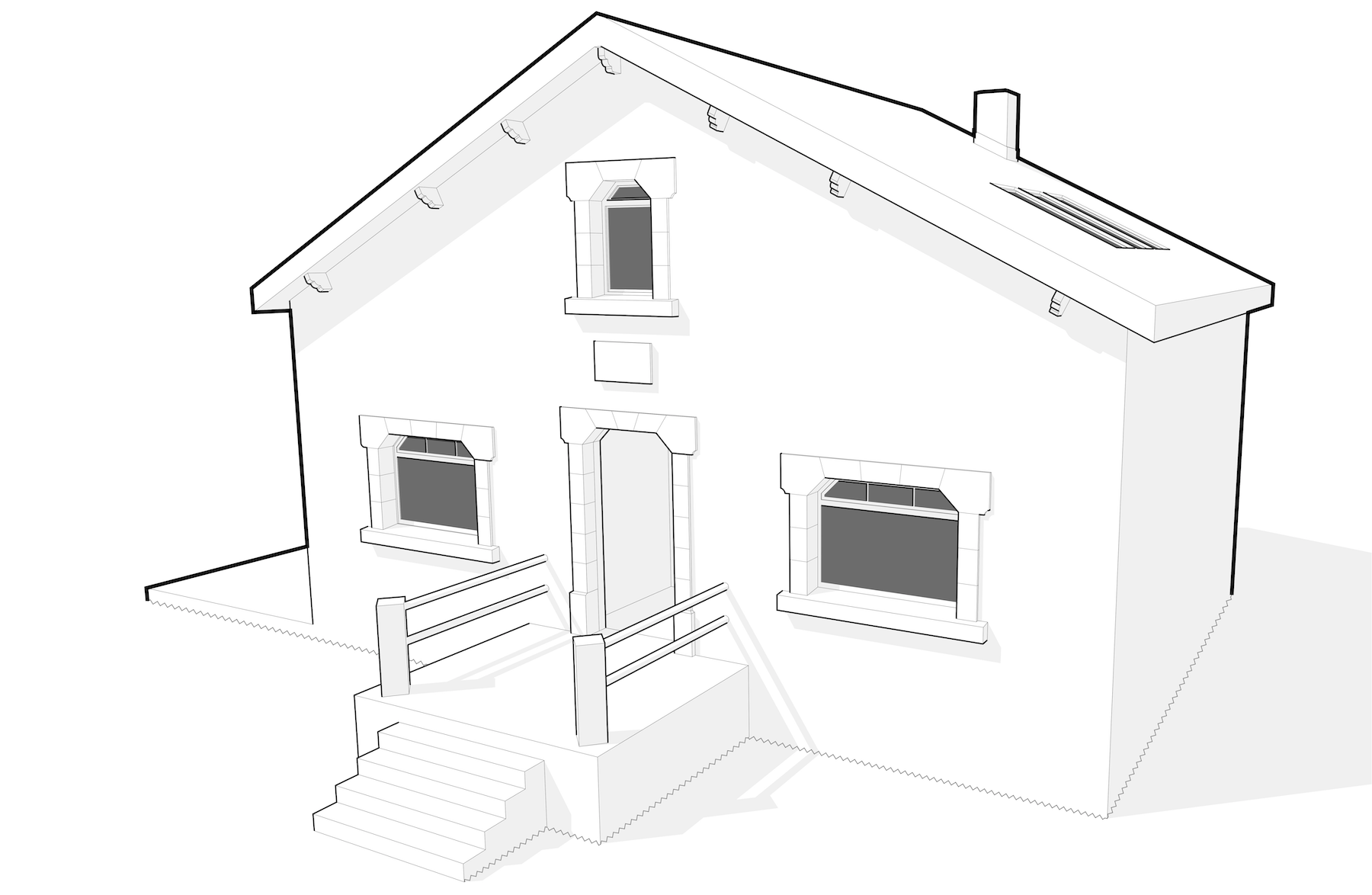
The unique style of the brick facade lends the project a character that has been sought to retain and build into the new interpretation.
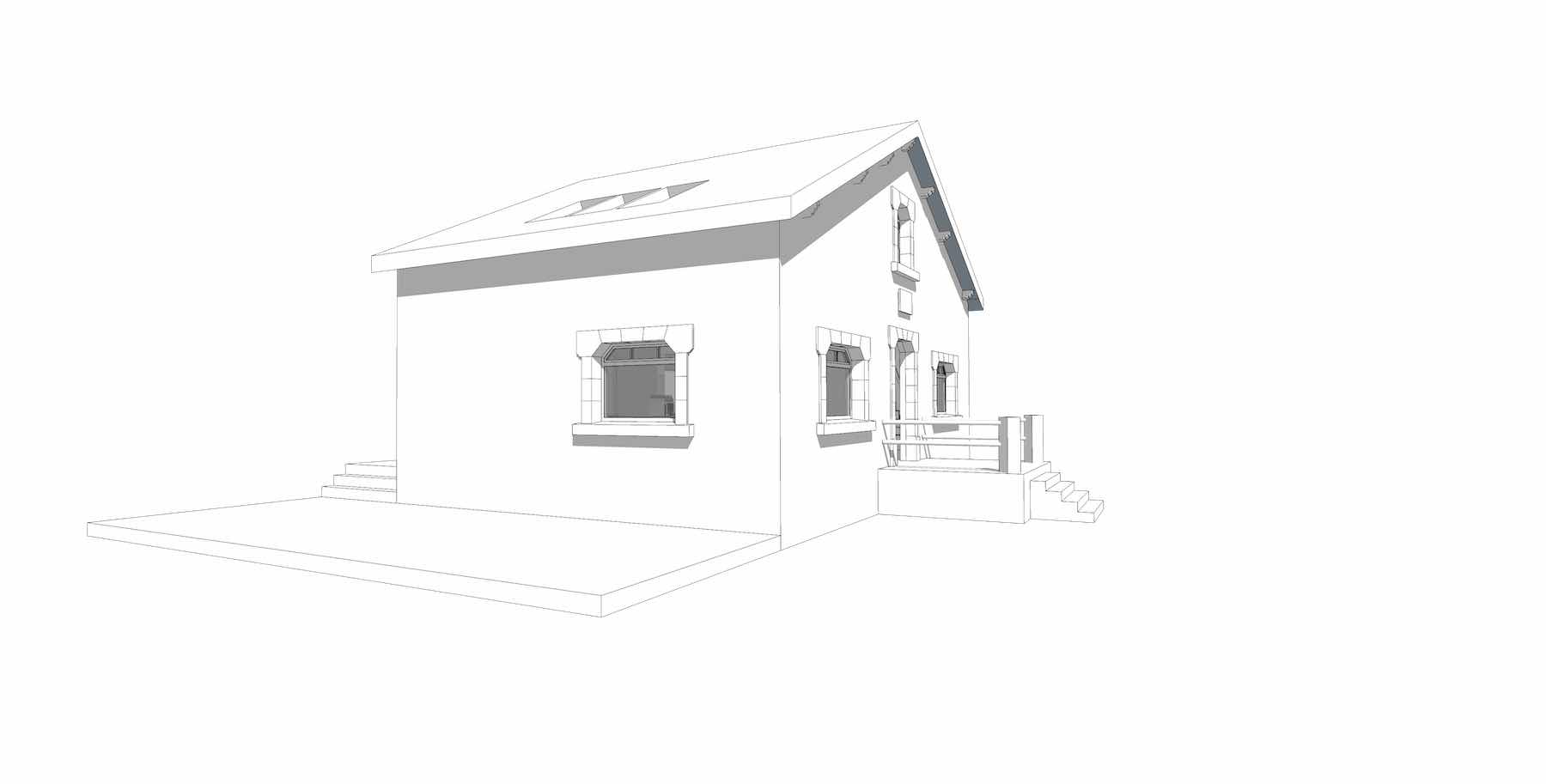
For homeowners searching for architectural help with a renovation, extension or ruin restoration project, the proposal highlights the value of clear architectural drawings, context-driven design and a thoughtful balance between preservation and contemporary living.

 Contact
Maison Spaces © 2026
Registered in France, located in the Aude.
Siret # 890 854 052 00010