
An intermittent journal of the design and planning process of taking an abandoned French barn and turning it into a family home. I break down my design decisions, how the planning regulations impacted the final design, and how the project was adapted as new dependencies and challenges presented themselves. The initial design phase represents the same methodologies I use for most of my client projects. What makes this one different is that, for the most part, I'm going to build this house myself.
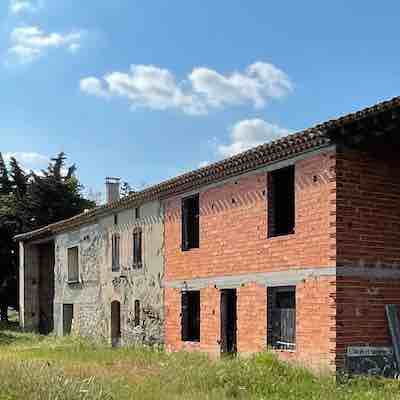
After two years of viewing – and disregarding – many properties and having our hopes raised with a handful of them, in May 2022 we found the (next) 'One'. A disused, and partly abandoned 'fermette' located in the Southern French countryside with great access to the Aude's major transport routes. This building, though having no great architectural merit, had bags of potential to be a fantastic family home, on a plot big enough to offer the space we were looking for. The problem; we were informed by the agent that planning permission had recently been refused. This did not bode well.
And so began a process of due diligence. I put my vision of how we could renovate the farm into drawings and 3d models. We spoke to the Maire of the village in which it is located. We spoke to local architectural advisory service. We spoke to the planning department. And while some responses were somewhat positive, there was a general air of 'Sorry, but you don't really stand a chance'.
This is what we were up against ... further investigations revealed that the application was for outline planning consent (Certificat d'Urbanism). But this CU was not for a family home, the vendors had previously made an application for a gîte complex. And this had been decisively kicked into touch on three counts;
By this point into our house search, we had garnered quite a bit of information about the planning rules around the Castelnaudary part of the Aude, we had looked at – and seriously considered – properties with limited new development opportunities, properties in flood zones, properties affected by the Canal du Midi regulations, and with one property that had a small river running alongside the boundary, there were also conditions in place for the riverbank.
 Contact
Maison Spaces © 2026
Registered in France, located in the Aude.
Siret # 890 854 052 00010