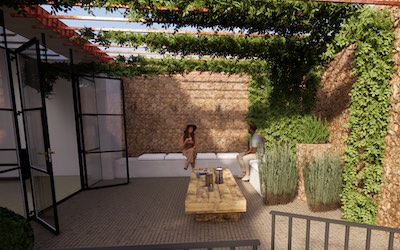
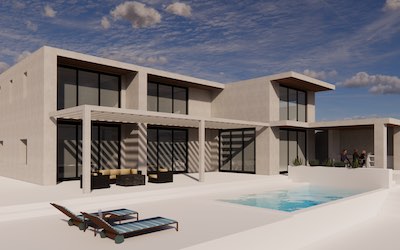
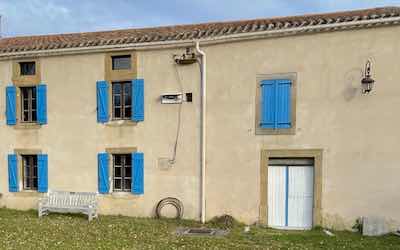
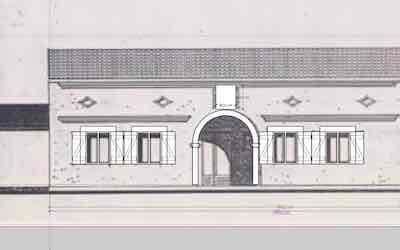
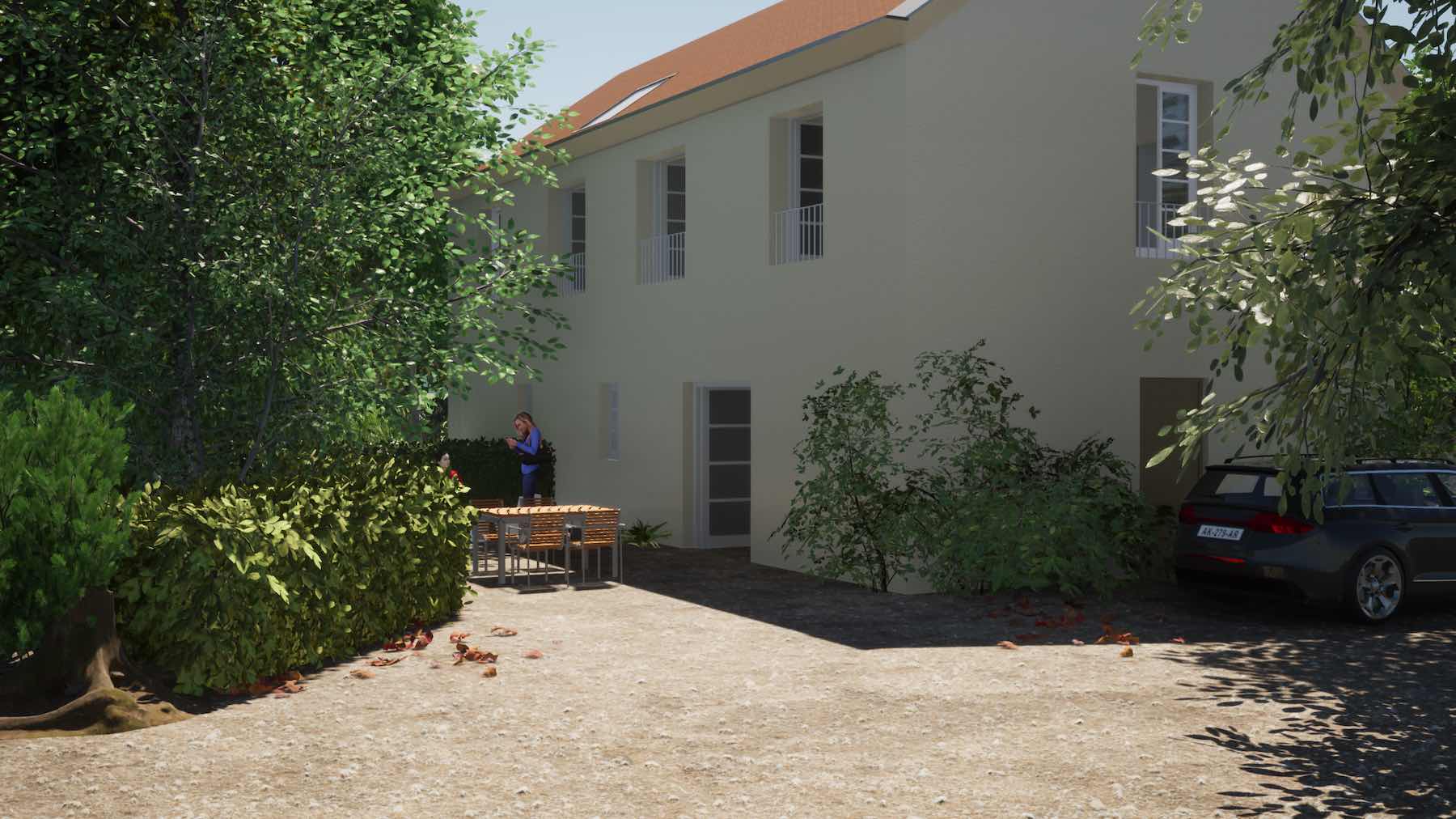
A conceptual renovation on the edge of the Montagne Noire explores how a poorly lit garage level could be transformed into a high-end holiday gîte through strategic architectural intervention rather than extensive structural change. Located near the market town of Revel in southern France, the 172-square-metre house presented a common challenge in rural conversions: a bright upper apartment paired with a dim, underused ground floor served by just three small windows.
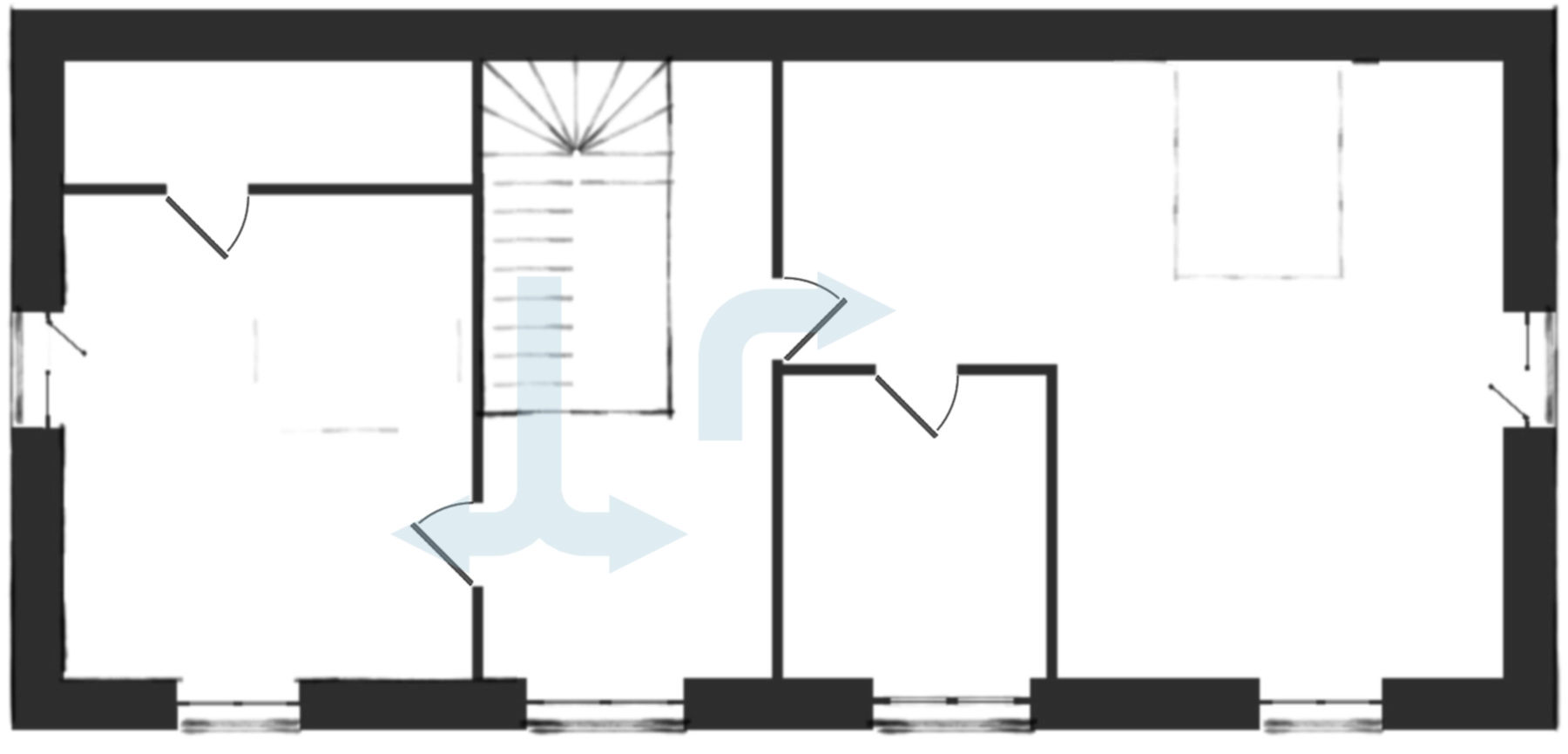
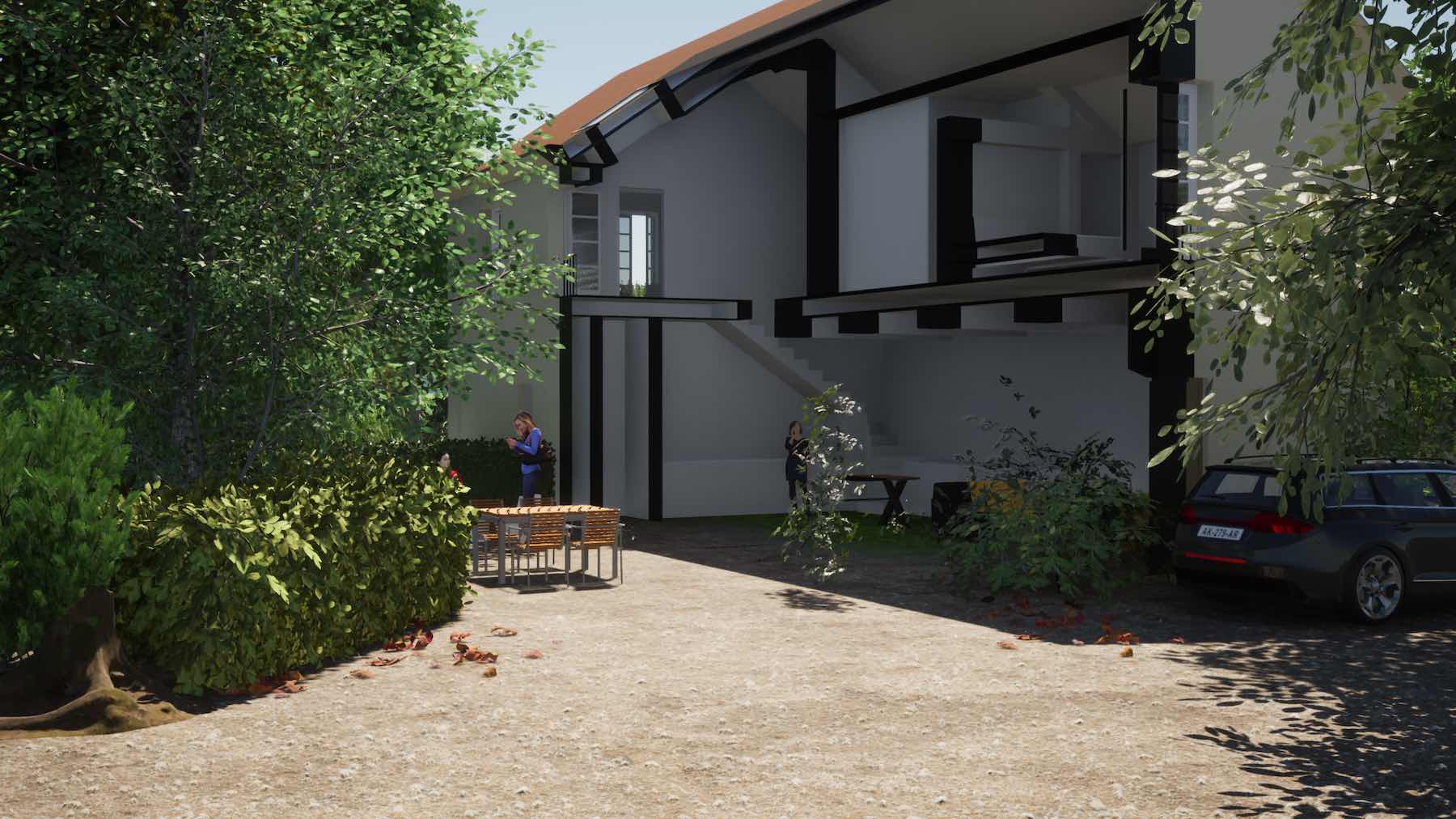
Instead of enlarging openings at ground level — often restricted by planning controls, structural constraints, or neighbouring properties — the proposal focuses on bringing daylight from above. The design introduces a dramatically expanded first-floor landing and opens the roof structure to accommodate new skylights. This approach allows sunlight to cascade through the stairwell and penetrate deep into the lower living areas, transforming the perceived quality of space without altering the building’s external footprint.
The enlarged landing functions as both circulation space and light well, creating a vertical connection between floors that visually amplifies the interior. As visitors ascend the stairs, their sightline is drawn upward toward the roof openings, producing a sense of height and openness typically absent in converted garage spaces. This spatial choreography is intended to counteract the low, enclosed character that often undermines the appeal of ground-floor holiday accommodation.
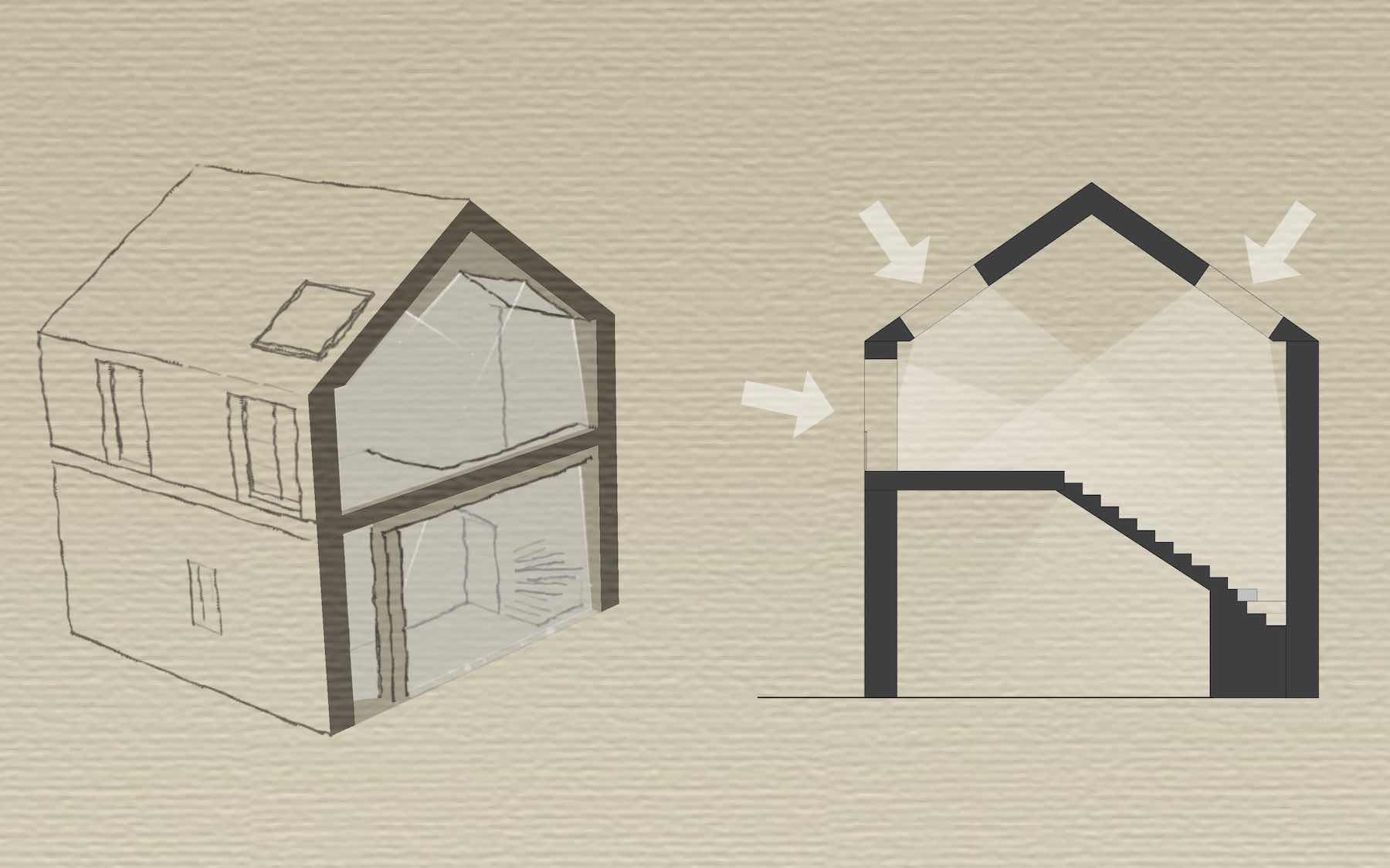
Such strategies are increasingly relevant for gîte renovations, where owners seek to maximise rental value while navigating heritage considerations and local planning permissions. Rooflights are frequently more acceptable to authorities than new façade openings, particularly in traditional rural settings (although the situation is different if the building is located within the proximity of a site of historic interest). By concentrating the new additions within the roof plane, the proposal demonstrates how contemporary living standards can be achieved while preserving the building’s external character.
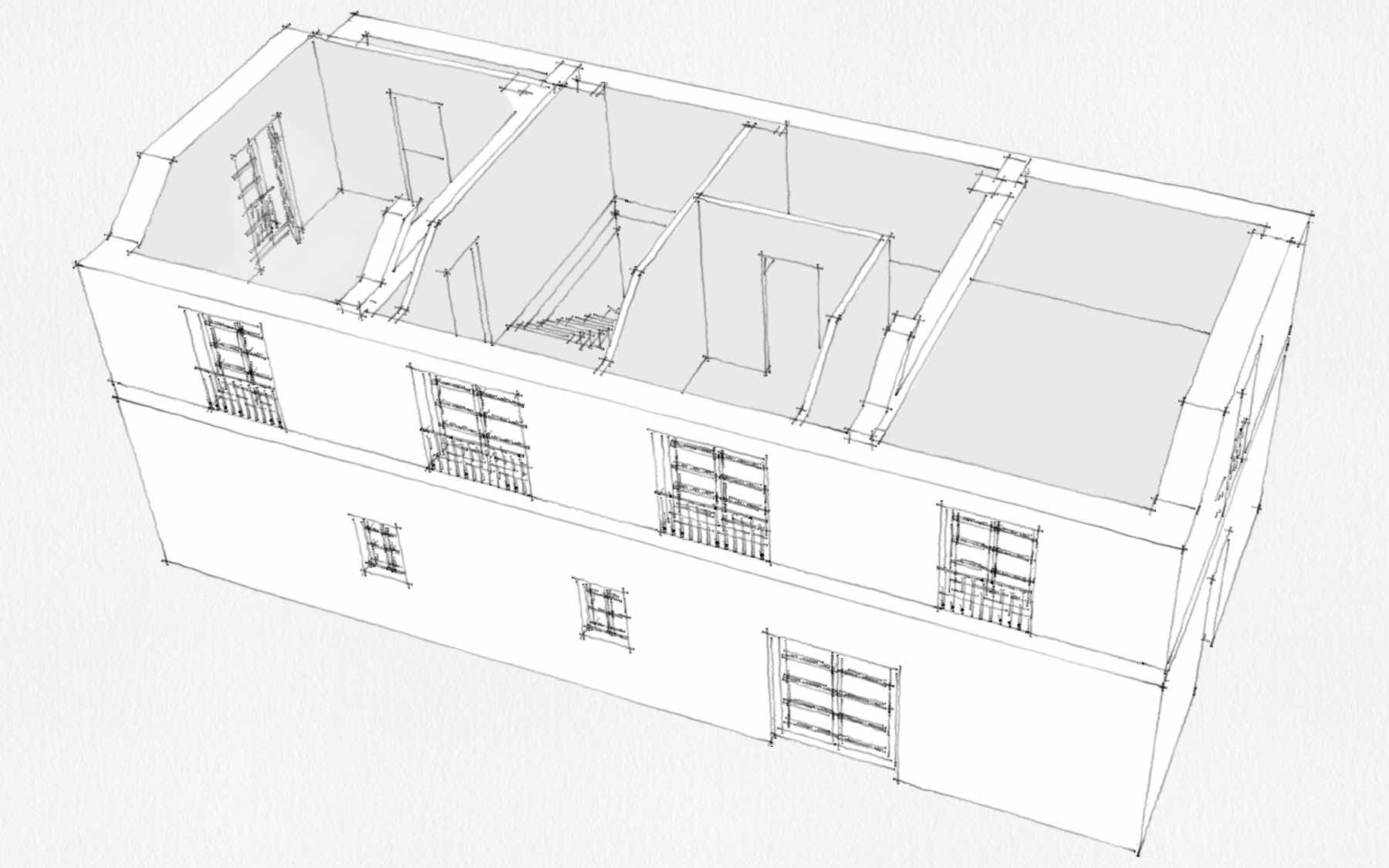
The concept also highlights the importance of first impressions in hospitality design. The generous landing creates a moment of arrival within the interior itself, suggesting a larger dwelling than the footprint might imply. This psychological expansion of space can be as valuable as physical enlargement, especially in adaptive reuse projects where structural alteration is costly or constrained.
Ultimately, the project proposes a replicable model for converting dark ancillary spaces into desirable accommodation. By leveraging vertical light distribution, spatial sequencing and minimal external change, the scheme illustrates how modest rural buildings can be repositioned as luxury gîtes — offering brightness, openness and architectural interest without sacrificing their vernacular context.

 Contact
Maison Spaces © 2026
Registered in France, located in the Aude.
Siret # 890 854 052 00010