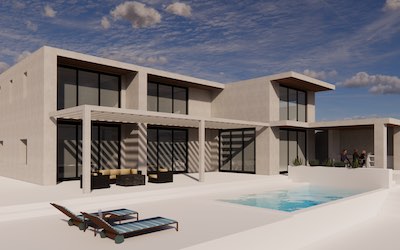
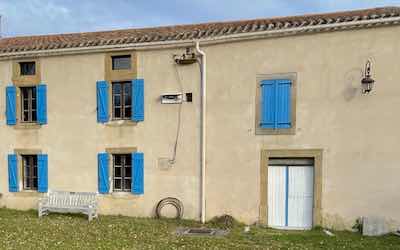
This three-storey village house situated the historic centre of a traditional Aude in the South West of France, underwent a complete architectural re-design and transformation. The house had stood empty for several years, and was typical of similar terraced houses in the locale; a well-worn wooden stairwell sat centrally in the house, which leads to two rooms on each of the first two floors, culminating in the loft space which was mostly non-developed aside a crumbling third bedroom constructed in one of the corners. The project aimed to modernise the property while preserving the charm and material honesty typical of rural French architecture, resulting in a contemporary residence that remains firmly connected to its historic context.
On the ground floor, we extended the footprint to achieve an overall internal area of approximately 130 square metres. This level was fully opened up to create an airy, fluid living zone oriented towards the east. Full-height bi-fold doors now open directly onto a new terrace and redesigned garden, enabling the entire façade to dissolve into the outdoors. The new extension housed the kitchen, and the roof was further extended to cover the terrace, creating a unified indoor-outdoor environment ideal for the region’s warm climate.
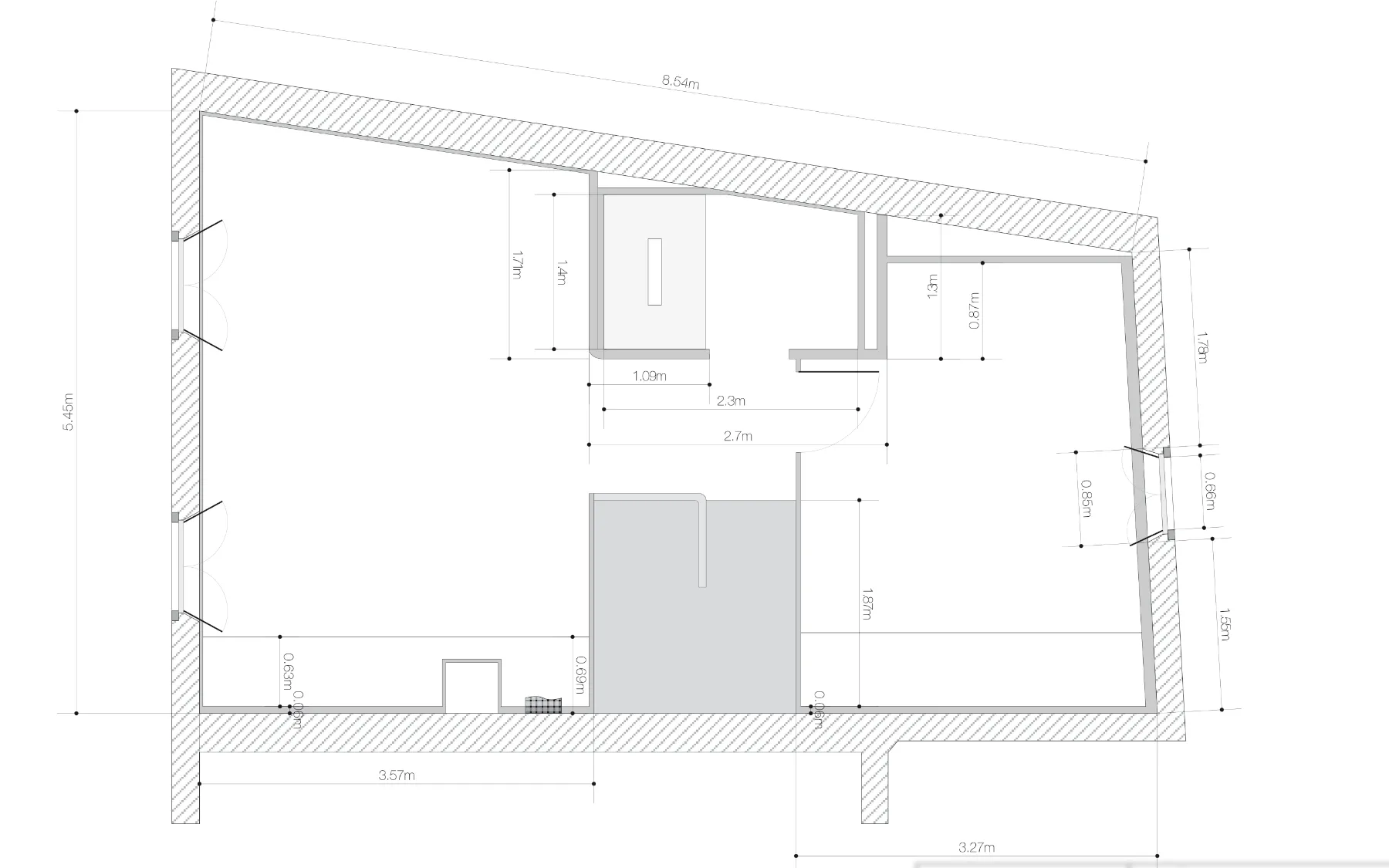
Inside, the interior design balances modern finishes with carefully preserved original materials. Exposed stonework is paired with crisp white plastered walls, while original timber beams contrast with sleek contemporary elements. The open-plan kitchen features gloss-black cabinetry and a bespoke black concrete countertop that anchors the space. Positioned between the dining area and the terrace, the kitchen was reconfigured to serve as a functional hinge point between interior and exterior living zones.

The reorganisation of the upper floors further enhances the home’s practicality. A former large first-floor bedroom was strategically divided to create a much-needed family bathroom and a well-proportioned additional bedroom, aligning the property with the expectations of modern family living. Above, a previously abandoned attic has been reinvented as a light-filled master bedroom, integrated ensuite bathroom and studio/office/4th bedroom.
Beyond aesthetic improvements, the project focused on enhancing circulation and storage throughout the home. By redefining the movement between floors and rethinking unused spaces, the new architectural design introduced a calm, functional layout that supports everyday life. The new plan also maximises natural light, particularly on the eastern elevation, where morning sun now floods the living area, creating a sense of warmth and serenity.

The re-building work was extensive as the existing roof had not many years left in it before it would require major repair work, therefore the decision was taken to renew the roof at the same time. Structurally, the building retained only its four exterior walls, staircase and load-bearing wooden beams. New hollow interior walls were constructed to hide all services, a few original widows were retained for their charm, but the rest were replaced with modern, double-glazed versions. Externally, very little was changed as the village is subject to historic monument planning restrictions. The inside however was completely gutted and rebuilt.
Through a creative and sensitive design approach, the project showcases how traditional French homes can be redeveloped to support modern lifestyles while maintaining their historic character.
 Contact
Maison Spaces © 2026
Registered in France, located in the Aude.
Siret # 890 854 052 00010